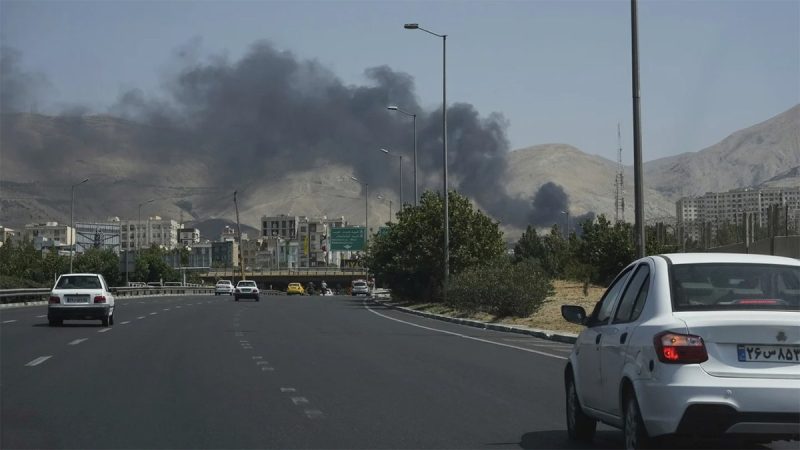
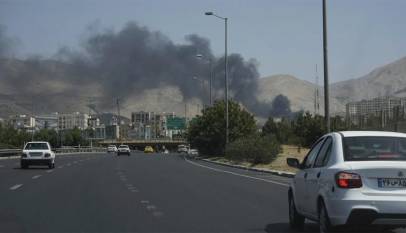
Iran’s tyrannical and ruthless regime is disintegrating. After yet again massacring thousands of its own citizens for voicing their dreams for liberty and better governance, the Iranian regime meantime resumed pursuing nuclear capability and its aggressive ICBM program. The regime’s overconfidence in U.S. inaction cost it its leader and its core military capabilities are going up in smoke. Against this backdrop, the conflict has spread to the Gulf, threatening the Strait of Hormuz, a chokepoint for roughly one-fifth of the world’s petroleum, and forcing the rest of the world to rethink how it prices energy risk and political alignment.
This is not another regional flare-up. This is a rupture of an old equilibrium in which sanctioned oil, shadow fleets and calibrated escalation kept markets stable enough to function. That equilibrium is now breaking. A rapid political-military shift in the Middle East is unfolding alongside a restructuring of the global energy order.
When I was in Afghanistan during the surge, Tehran’s active support for the insurgency fighting the United States and Afghan forces fomented instability and amplified violence for which civilians paid the biggest price, a dynamic that so many across several nations have tragically encountered for decades. But Iran was never a contained regional problem.
While its terrorism was widely perceived as a Middle East issue, its cyber and intelligence operations spanned continents, with assassination plots that included the American president. As to global effects, Iran’s energy has always made its regime globally significant.
At this stage of the conflict, the most economically significant and immediate geography is the Strait of Hormuz which Iran is working to choke off. Roughly one-fifth of global petroleum and a substantial portion of liquefied natural gas move through that narrow corridor. As strikes intensified, vessels paused transit, insurers reassessed exposure and operators rerouted cargoes. Markets adjusted immediately. Energy security and geopolitical stability are now inseparable; maritime risk has become the pressure valve through which regional conflict spills into global consequence.
This realignment did not begin in the Gulf this weekend. It started with U.S. actions in Venezuela. Caracas holds the world’s largest proven crude reserves — about 303 billion barrels — and even marginal normalization under a more U.S.-cooperative government alters the supply calculus for Washington and its allies.
The new U.S.–Venezuela arrangement has already generated roughly $2 billion in transactions in just weeks, pulling Venezuelan barrels back into wider circulation and altering the discount ecosystem Moscow had grown accustomed to. Stack that with a post-crisis Iran re-entering markets on different terms, and the shadow ecosystem of discounted, sanctioned crude — Russia, Iran, Venezuela — begins to fracture and reprice simultaneously.
But the most consequential energy recalibration runs through Beijing. China is essentially Iran’s oil export market. In 2025, China bought more than 80% of Iran’s shipped oil, averaging ~1.38 million barrels per day, about 13.4% of China’s seaborne crude imports—meaning Beijing is simultaneously Tehran’s economic lifeline and its strategic choke chain.
By turning a sanctioned producer into a quasi-captive supply relationship — sustained through gray-market routing, reflagging and intermediary hubs — Beijing secured discounted barrels in normal times and leverage in crisis. Any sustained disruption of Iranian flows forces China into replacement buying that tightens global markets and exposes China’s own energy security; Iran exports about 1.6 million bpd mainly to China and such disruptions pushes Beijing to pivot to alternatives.
The relationship is therefore best understood as a dependency loop: Iran needs China for revenue and sanctions relief-by-proxy; China uses Iran as a discount supplier and as a pressure valve in the sanctioned crude system — one that can be tightened or loosened depending on Beijing’s broader negotiation posture with Washington and its appetite for risk in the Gulf. That Iran-China dependency is no longer stable. With Iranian oil flows disrupted, China faces a choice between turning to alternative suppliers at higher cost or even tapping strategic reserves. Tightening global crude markets resulting from U.S. actions in Venezuela and now Iran give Washington leverage in energy pricing.
Beyond the tanker decks, this shift underscores the larger theme of reconfiguration: resources once bundled to manage sanctions are now subject to heightened geopolitical risk, forcing China to rethink dependencies while the U.S. and its partners are positioning to shape the post-conflict energy order. Energy supply patterns will restructure global power relations. And where China is recalibrating exposure, Russia is recalculating opportunity.
The same forces reshaping China’s calculations are altering Moscow’s. As India trims Russian purchases, Moscow has been pushing more barrels into China, and Reuters reports China’s Russian crude imports hitting new records in February while Russian sellers widened discounts to keep demand — Urals trading roughly $9–$11 below Brent for China deliveries, and other Russian grades also cutting hard as sellers chase Chinese refiners.
The new U.S.–Venezuela arrangement has already generated roughly $2 billion in transactions in just weeks, pulling Venezuelan barrels back into wider circulation and altering the discount ecosystem Moscow had grown accustomed to.
This matters because China is also the anchor buyer for sanctioned Iranian crude; the ‘discount market’ is not infinite, so Russia and Iran are now competing for the same limited pool of Chinese buyers, driving deeper concessions and leaving cargoes idling — exactly the kind of sanctions-economy dynamic.
Add the West’s tightening focus on Russia’s ‘shadow fleet’ and the risk of seizures or insurance denial, and you get an energy chessboard where coercion moves from rhetoric to logistics: who can ship, insure and clear payments reliably becomes as strategic as who can produce.
In that context, Russia’s loud warnings about Hormuz disruption are not just diplomacy, they are a reminder that Moscow profits from volatility, but also needs a functioning gray-market channel to China, and Iran’s crisis threatens to scramble the very discount ecosystem Russia has used to finance its war in Ukraine. Structural realignment threatens the very gray-market architecture on which Moscow has relied.
Energy is only one layer of a global shift. Strategic minerals remain critical. The Trump administration has increased economic and maritime pressure on Cuba, tightening an effective oil blockade that choked off fuel imports. President Donald Trump has authorized tariffs targeting countries supplying oil to Havana.
This is not simply punitive policy. It reflects a broader strategic doctrine: deny adversarial regimes energy lifelines while repositioning the Western Hemisphere’s resource base toward U.S. leverage. Oil is only one domain. Rare earth elements are a strategic asset. Cuba’s nickel and cobalt output, combined with China’s tightening grip through rare-earth export controls indicates that leverage is not just oil fields but also supply chains. America achieving rare earth elements sovereignty will remain a strategic goal and such a global realignment on this front is much needed.
By the close of the first weekend, Iran appeared intent on accelerating its own collapse by compounding strategic error with strategic error. Iran felt it wise to respond to U.S. and Israeli strikes by pushing a half dozen other nations against it. On Saturday afternoon, Feb. 28, Iran launched attacks on seven sovereign nations – Bahrain, Saudi Arabia, UAE, Kuwait, Qatar, Jordan and Israel. It added Oman shortly after.
These nations now have a legal and political basis to deepen security ties with the U.S. and Israel that they could never have justified domestically before today. Iran has arguably done more to consolidate the anti-Iran regional architecture in one afternoon than a decade of American diplomacy. Watch for accelerated Abraham Accords-adjacent normalization with Saudi Arabia in the coming weeks.
Any sustained disruption of Iranian flows forces China into replacement buying that tightens global markets and exposes China’s own energy security…
After massacring thousands of its own citizens for demanding better governance, the regime’s long-standing presumption of U.S. inaction cost the 1979 Revolution its dream of ruling over Iranians perpetually. After 47 years, its leader is gone, and its core military capabilities are being dismantled.
The lesson is not simply that the Iranian regime is falling. It is that when it falls amid energy chokepoints and great-power competition, supply chains, alliances and leverage structures shift simultaneously. Iran’s collapse is not the end of the story; it is the catalyst for a broader redistribution of power across energy, alliances, and great-power leverage. America should exploit these shifting dynamics fully.
The views expressed here are his and do not reflect the policy or positions of the Department of Homeland Security, Homeland Security Advisory Council, U.S. Army or Department of Defense.
Related Article

Tom Emmer calls for Tim Walz, Keith Ellison to ‘serve jail time’ if fraud coverup allegations are true
The highest-ranking Minnesotan in Congress is calling for a deeper investigation into alle…






Tom Emmer calls for Tim Walz, Keith Ellison to ‘serve jail time’ if fraud coverup allegations are true
The highest-ranking Minnesotan in Congress is calling for a deeper investigation into allegations that …